
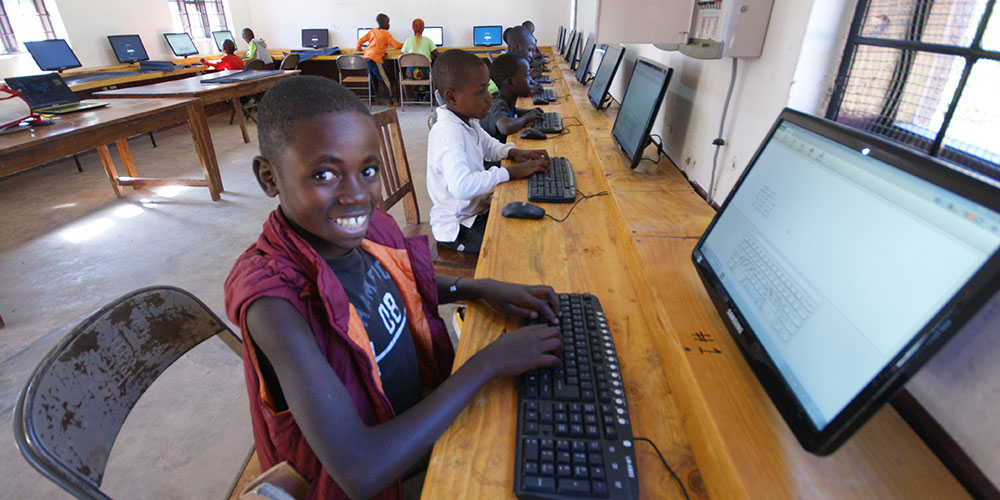
Computers for Schools, NGOs, Nonprofits and Underserved Youth Worldwide
Since 2000, World Computer Exchange has shipped over 42,875 computers to 3729 sites in 54 developing countries, serving an estimated 5,441,823 students over the course of 24 years. World Computer Exchange is the most experienced and trusted nonprofit in this field in the U.S. Our committed network of volunteers and corporate partners enables us to carefully collect, test, and prepare computers for distribution. With a wealth of expertise in international logistics (ICT4D Logistics), we are fully equipped to handle shipments of all sizes worldwide.
We provide refurbished laptops, desktops, cell phones, and tablets.
Download our 2025 Product Guide.
GET COMPUTERS
WCE Computers

WCE computers have been donated and are refurbished by volunteers. Inventory is limited, and a fee is charged to cover the cost of sourcing, testing, and preparing the computers.
Fulfillment Partner Computers

We work with trusted fulfillment partners to meet demand for laptop and desktop requests. These are companies that offer discounted rates to schools, nonprofit organizations, and NGOs.
Computer Donation Campaigns

Organizations that are unable to cover costs may apply for a donation campaign. Organizations must be registered nonprofits and have supporters in the U.S.
IMPORTANT DETAILS
Calculate the Costs:
While we strive to keep prices as affordable as possible, there are inherent costs associated with sourcing, testing, and shipping the computers. Please review our price list to understand the expenses related to our computers. Additionally, shipping and import taxes must be taken into account when placing an order. Shipping costs are determined by the weight and dimensions of the shipment, which means accurate calculations can only be made once the goods are prepared.
Used computers are good, but they aren’t like new.
Expect the computers to have signs of wear. Laptop batteries will hold a charge, but the duration is unpredictable
Importing Can Be Challenging:
Importing can present challenges, so we recommend working with a customs broker to help streamline the process.
Be prepared to pay import taxes:
Although it’s possible to request a tax waiver from the government, this process can be lengthy and isn’t guaranteed. It’s often more efficient to budget for these taxes upfront. Some countries impose high import duties on computers, with rates reaching up to 100% of the invoiced price. Research the tax rates for used computers in your destination country before placing an order.
International shipping can be costly.
Based in the United States, our shipping rates vary based on the destination, weight, and dimensions of the shipment. We offer options for both air and ocean freight.
In-Country Transportation:
Once the goods arrive at a port of entry—be it a seaport or airport—you will need to arrange for transportation to your destination.
Lithium Batteries are Hazardous:
Laptops contain lithium batteries, which are considered hazardous materials and may not be accepted by all freight carriers. We have experience in packaging laptops to meet lithium battery regulations. Generally, shipping laptops with batteries by air freight is more manageable than by ocean freight, as pallets of laptops with batteries cannot be mixed with other goods in an ocean container.
Import Restrictions:
Be aware that some countries have banned or heavily restricted the import of used computers. Several African nations, including Rwanda and Uganda, have implemented strict regulations. Ensure that your country permits the import of used computers.
Consider Local Options:
When calculating costs, compare the total expense of purchasing our computers, including transportation and import efforts, against local sourcing options. If local resources offer a more economical and convenient solution, we encourage you to explore that option. Our mission is to connect people with technology, and utilizing local resources whenever possible is often the best approach.